Translate

Sunday, February 10, 2019

Why Dingle Is My Favourite Irish Town

Harrington's Restaurant on the Main Street of Dingle, Ireland


The smell of turf fires lingered in the air on a chilly August evening, and the sounds of laughter and traditional Irish music spilled out of the pub doors as we walked past.  In the warm town of Dingle on the West Coast of Ireland, you feel more like a temporary local than a tourist.


Summer street scene in front of Murphy's Pub, Dingle, Ireland
Now, I might be upsetting a few Irish folks that are proud of their own home town, but for our family, Dingle was the perfect Irish town.  Brightly coloured tidy buildings lined the waterfront of this fishing village that was easily walkable.  Interesting artists' shops, restaurants, and pubs abound here in Dingle making it a joy to discover.  Many people pass through Dingle on the Slea Head Drive around the Dingle Peninsula but don't stop in and spend enough time in the town itself.  There seems to be something to do for everyone in this tiny West Coast town of just under 2,000 people.  Dingle is a Gaeltacht town, meaning that many folks speak Irish to each other and in their homes.  I loved overhearing a conversation or two in Irish; it made Dingle feel all the more exotic!  Here are 7 other reasons why Dingle is my favourite Irish town...


1. AQUARIUM & INCH STRAND


Beautiful sand beach of Inch Strand Dingle Peninsula Ireland
Inch Beach

A favourite thing to do with children in Dingle is to visit Oceanworld Aquarium right on Dingle's waterfront.  TIP: If you purchase tickets online you save a few Euros on the entrance fee.  
My teen Liam didn't want to go check out the aquarium (to my disappointment), so instead, we headed just a few kilometres out of town to Inch Strand.  Inch Beach or strand is a gorgeous sandy beach that sticks out four miles into Dingle Bay.  The clean waters and safe swimming of Inch Strand made it a kid-friendly place to stop.  Kingdom Waves is a surfing school on Inch Strand popular with teens and kids of all ages, and there is a convenient beach bistro to stop in and get a nice hot drink or lunch.


2. MURPHYS ICE CREAM


Murphy's Ice Cream Shop Dingle, Ireland
The Best Ice Cream In Ireland


Right along the main drag of Dingle, stop in for a treat at Murphy's Ice Cream, the most delicious ice cream in Ireland.  I am not exaggerating when I say this.  Our jaunting car driver in Killarney National Park told us that if there is ONE THING we must do in Dingle, it was to have ice cream at Murphy's.  Why is this ice cream so special?  Murphys not only uses fresh local ingredients like free-range eggs, local honey, and Dingle GIN, but Murphy also makes their own sea salt from the Dingle coast and their big SECRET: cream from the rare indigenous Kerry cow.  The high-fat cream from these small black cows you see grazing in the fields around the Dingle Peninsula is what makes this ice cream worth the €6 price tag.  You must try the Sea Salt and Caramel Honeycomb two-scoop combo, it was OUT OF THIS WORLD!  If you can't make it out to Dingle -no worries!  Murphys now has shops in Dublin, Galway, Kilkenny,  and Killarney.


3. BOAT TOUR
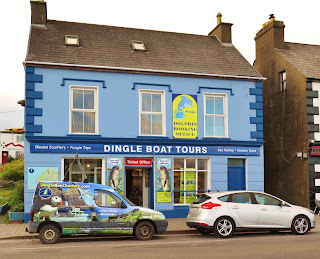


Dingle Bay Charters and Dingle Boat Tours in Dingle, Ireland

What would Dingle be without its loveable maritime friend Fungie the dolphin?  He's been frolicking with boats in Dingle Bay for over 30 years.  Two companies offer Fungie The Dolphin Tours around Dingle Harbour.   The one-hour harbour cruise costs €10 and is a massive hit with kids.   Dingle Bay Charters also provide ferry service to Great Blasket Island off the coast of Slea Head, a Blasket Islands Eco-Tour, a Deep Sea Fishing Excursions and new for the 2019 season: a Skellig Micheal Tour (this is not a landing tour, just an eco-tour around the Skellig Islands). 


4. SHOPPING


Palm tree in front of St. Mary's Church bell tower in Dingle Ireland
St Mary's Church
Small brightly lit passageways in Dingle Town Ireland
Dingle Charm

If a Harbour cruise is not your thing, then a pedestrian cruise around the village is perfect.  Dingle is easy to wander on foot and is set up on a Medieval Street Plan, with Main Street running up and over the top of town.  Wander into some of the outstanding craft shops that feature woollen knitwear and weaving, pottery, goldsmiths and Dingle Crystal.  There were also a few great music shops like Siopa Ceoil that sell Traditional Irish Folk music CD's, Irish instruments, song and music books and instructional DVD's.  Also, in the summer the shop held evening music concerts known as "sessions" several times a week.  Siopa Ceoil is THE place to find out what is going on musically in Dingle, located just off Strand Street in a lane marked "The Colony."


5. FISH & CHIPS


Fun menu's on the tables of Harrington's family restaurant in Dingle Ireland
Table At Harringtons!
Lightly smoked haddock and chips at Harrington's Family Restaurant in Dingle Ireland
Smoked Haddock & Chips!
All that exploring can work up one's appetite!  Our family has a rule: for one day on each vacation our son gets to choose what we do and where we eat, and in Dingle, it was fish and chips!  Our teen chose Harington's Family Restaurant on Strand Street right across from the Tourist Office.  This place felt like a classic teen joint, and there were tons of locals eating dinner there (not all teens by the way!)   Menus are glued onto each table, and the decor is random and eclectic.  The fish and chips were cooked to heavenly perfection, the burgers were homemade,  milkshakes used real ice cream, and the fries were crisp on the outside and nice and soft in the middle. I recommend the lightly smoked haddock and chips -OUT OF THIS WORLD!


6. TRADITIONAL IRISH MUSIC
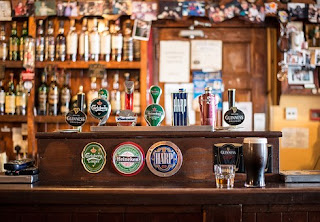


Bar in Irish Pub Dingle IrelandDingle is known for its traditional Irish music scene (called Trad music), and the best place to see a Trad Music session is in the pubs.  The music usually starts around 9:30 and pubs close at 11:30.  If you are travelling Ireland with your children, it may be a bit more challenging to hear Trad music because children under 14 must leave the pubs by 9:00.  Children over 14 and under 18 however, may remain in the pub after 9:00 as long as they are accompanied by their parents (we had no problem bringing our 16-year old into the pubs).  If you have younger children, fear not, you can still hear the same musicians play at St. James Church just off Main Street at the top of town.  You can buy tickets at the Dingle Music Shop Siopa Ceoil.


7. CONNOR PASS


For a Grande Finale of Dingle, I recommend you take a drive up to the infamous Connor Pass.  Connor Pass or An Chonair in Irish Gaelic is a narrow twisting (mostly one lane) road that is the highest mountain pass in all of Ireland.  The Connor Pass road runs from Dingle to Kilmore Cross and then on to Tralee on the North side of the Dingle Peninsula, offering scenic views in either direction you are travelling.  To get to the Connor Pass head to the R560 which starts as "The Mall" from the round-about in Dingle centre.  The road then turns into Spa Road once it crosses John Street at the top of town; follow this road all the way to The Connor Pass summit.
At the summit of the Connor Pass, there is a large car park where you can stop and take in the views of both sides of the Dingle Peninsula.  This is a fabulous spot to watch the sun go down over Dingle Town and the Dingle Peninsula.


View of Dingle town from Connor Pass, Dingle Peninsula, Ireland


Have you visited Dingle?  What was your favourite activity?  Please share in the comments below, I would love some suggestions for the next time I visit this colourful Irish town...


Follow me on FACEBOOKINSTAGRAM  and  BLOGLOVIN'  for daily photos and updates! #slowtravel🐌 

Sunday, February 3, 2019

Storytime-Life Lessons from an Arizona Vortex

Sedona, Arizona vista of red rocks canyon from Cathedral Rock


Powerful energy centres called Vortexes are located in the desert of Arizona, which are intersections of naturally occurring electromagnetic Earth energy called ley lines.  The transformative healing of the Vortexes must be experienced to be believed...

2019 is going to be a momentous year for me.  That is not only what the astrologer that I follow said, but because I know once you hit bottom; the only direction is up.  You see, this past New Years' I not only found myself separated from my husband of nearly twenty years but also the sole caregiver to my teenage son.  I rang in 2019 in a state of emotional and spiritual distress, trying to figure out how I was going to try to put my life back together again.  


View from the Red Rocks Scienc Byway Visitor Center Sedona Arizona

Luckily I had a work trip to Scottsdale, Arizona booked for a belly dance retreat.  It was a three day intensive with six hours a day of instruction, lunch hour lectures and evening performances.  I honestly didn't know if I had it in me to keep up to the rigorous pace of such a physically demanding schedule, but I really needed a mental break from my life and a way to feed my soul.  Besides, the trip was all paid for already and non-refundable!

Warning sign for poisonous snakes and scorpions
I was travelling with members of my dance troupe from Ontario, and we decided to arrive in Scottsdale a day early and rent a van to visit Sedona for some exploring.  Upon researching hikes around Sedona, I discovered that there are said to be "Vortices" or centres of energy that are conducive to healing.  This turned out to be in perfect alignment with what I needed.  So what's the deal with Vortexes?


Hiking trail leading to Cathedral Rock Sedona, Arizona
Start of the Trail To Cathedral Rock

The 22-mile radius around Sedona is said to be a great big Vortex, and approaching the town you could feel a shift of emotions in your body. Was it excitement, anticipation....anxiety?   For those who have experienced Vortex phenomena, they explained it to me like this:  Vortices amplify your emotions and energy.  If you are feeling happy, your Spiritual experience will be blissful and positive, and if you are depressed or agitated, you could have a negative experience.  It is believed that each Vortex point has either Inflow energy (Yin energy that is feminine) or Upflow energy (Yang energy that is masculine).  It is essential therefore to treat your hike to a Vortex like a pilgrimage and prepare yourself emotionally. 

Experiencing the power of Cathedral Rock's vortex in Sedona, Arizona
First Plateau Below Cathedral Rock
Cathedral Rock is an iconic symbol of Sedona and one of the more popular places to hike to experience an Inflow Vortex, and Bell Rock is the most trekked of the Upflow Vortexes.  Both of these trails are listed as "easy" hikes, but that is a bit misleading because although short; the trails are vertically challenging.  To reach the trailhead for Cathedral Rock take the turnoff to Back O' Beyond Road at the roundabout on Highway 179 (Red Rocks Scenic Byway.)  You will come across a parking lot and an overflow parking area, both on the left side of the road.  There is a meter at the trailhead where you need to purchase a $5.00 "pay-and-display" ticket for all day parking.  Cash and credit cards were both accepted in the machine.  


Approaching the Saddle of Cathedral Rock in Sedona, Arizona
Approaching The Saddle Of Cathedral Rock
The Cathedral Rock trail is a series of mesa or plateaus connected by steep verticle inclines.  The first part of the trail is easy, and you can walk through the red earth in a pair of Birkenstocks like one of my fellow dance partners did.  Quite quickly you arrive at the first plateau with a fantastic view of Cathedral Rock above you and the Red Rock formations of the Sedona Valley surrounding you. This windy tabletop is considered to be an Upflow Vortex point, and I noticed something strange began to happen.  First, the trail leading on from here started to climb significantly, and one of our hiking companions had begun to get a cramp in her foot, so she decided to turn around and meet us back at the trailhead.  Soon the trail inclined again requiring hikers to use their hands to climb the rocks that became like a ladder.   Another one of my companions slipped and hit her hand so hard that she almost sprained her thumb; she was out for the hike.  My next friend, who was wearing a gorgeous pair of blue suede loafers reluctantly stayed behind the group, slowly making his way to the next mesa because his shoes did not offer enough traction on the dusty bouldersPROPER HIKING SHOES IS A MUST  TO REACH THE SUMMIT OF THIS TRAIL!


Close up of the red rocks of Cathedral Rock summit in Sedona, Arizona
Beautiful Red 


We were down to half of our original group now, and the path inclined again becoming almost verticle.  Watching people using rock scrambling techniques to continue upwards terrified one of my companions who was worried about trying to get back down the steep incline, and she decided it was best for her to stop at that point.  It was only my one last friend and now, I huffing and puffing up the dusty red trail trying to find the next rock-cairn trail marker when all of a sudden, my friend's breathing became laboured.   She was having difficulty with asthma-like symptoms and told me she would have to stay behind.  My dear friend looked up at me solemnly and said: "Monika I think you are meant to make the rest of this journey on your own."   I nearly burst into tears.  My first thought (and every other thought after that) was I CAN'T DO IT ALONE!  But some strange force deep within me propelled me forward, and I nodded and continued upwards. I had come so far already, I couldn't give up at this time.  All my self-doubts rose to the surface, and the journey to the top of Cathedral Rock became a giant metaphor in my mind for rebuilding my life.


Cathedral Rock end of trail marker in Sedona, Arizona
With each footstep, my husbands' voice started echoing inside my head, telling me that I was not strong enough to make it to the top alone.  What if I got lost and nobody could find me?  What if I hurt myself and there was no one to help me back down?  What if my friends down below though I was too slow and left me to go into town (oh right, I had the car keys in my backpack-whoops!)  Why weren't there more people climbing up the path, so I easily could follow along behind them?  
Every now and again a few elated hikers came down the steep path and offered me encouragements as they passed:  "You are almost there; keep going!"  and "It's worth the climb, it's spectacular up there!"  Honestly, if it were not for those reassuring words from these strangers I would have turned around and fled to the safety of my friends below.  But I had made it this far already to turn back now seemed like a waste.  So I gathered up my strength,  and told myself that I was doing great and that I can do this difficult and challenging thing BY MYSELF at my own pace, just by putting one foot in front of the other; eventually, I would get to the top.  Kind of like life, right?
And I did.


View of red canyons from the summit of Cathedral Rock, Sedona, Arizona
Womb With A View


I saw the end of trail sign, and I could not believe my accomplishment!  My body was tingling with energy, and my eyes inhaled the most incredible vista of the Sedona canyonlands below me.    I found myself on the edge of a cliff in a natural amphitheatre of red rocks that felt like being in the Earth's womb; in fact, I have heard the summit of Cathedral Rock referred to as "a womb with a view."  I wish I had had someone with me to witness the moment, but at the same time,  the solo trek made my experience a Spiritual initiation for me.  Sitting on a rock near the ledge, I briefly closed my teary eyes and listened to the wind.  I wanted to burn the moment in my memory for future use when I began to doubt myself again.  


Just as I was hoisting my daypack back on to return down the trail, two women from Hawaii arrived breathlessly at the summit.  They offered to do a photo exchange with me since I was alone on the trail.  I am so happy they arrived when they did because now I have a touchstone to remember the incredible Vortex experience of Cathedral Rock where I learned I am never really alone.  Mother Earth has always had my back.   After the challenging slide back down the rocks, my dear friends were waiting for me at the bottom. They had not abandoned me, which just reinforced the knowledge that I was supported on my journey even though I had to walk the steps by my self.  I look forward to blogging SOLO adventures in 2019 and in the future, overcoming my travel anxieties, doubts and fears of a woman travelling alone for the first time in 20 years!  

Stunning views of Cathedral Rock summit in Sedona, Arizona
I DID IT!!!!


Follow me on FACEBOOKINSTAGRAM  and  BLOGLOVIN'  for daily photos and updates! #slowtravel🐌 


Sunday, January 20, 2019

Top 10 Amazing towns to Visit in Umbria, Italy

View of Spoleto, Umbria from the Rocca


Umbria is known as "The green heart of Italy" where the pig and truffle are kings of the forest.  Ancient Roman ruins and Medieval hilltowns dot the countryside of this mystic region known for producing the most Saints in all of Italy.  Here are my top 10 favourite Umbrian towns...


Assisi


Sunset on the Basilica of St. Francis in Assisi, Italy
Sunset In Assisi

My number one pick for the top Umbrian town is Assisi.  Assisi is not off the beaten path, but it is hands down my favourite city in all of Umbria.  Assisi sits on the slopes of Monte Subasio facing West to capture what I think are the most sublime sunsets in all of Umbria.  The Romans named this settlement Asisium in 295 BCE, and it thrived for centuries as part of a trade route to the Adriatic.  There are many Roman ruins to be seen in Assisi such as a theatre, an amphitheatre, a Roman crypt under the church of St. Benedict and the Temple of Minerva which is now a Catholic church.  There is also a Medieval castle called Rocca Maggiore perched at the top of Assisi that offers stunning views of the Umbrian countryside below.  Piazza del Comune is considered the main square of Assisi and is where the Roman forum of Asisium once stood, and it is still under the streets.


Walking through the small lanes in the ancient town of Assisi Umbria Italy
Wandering The Streets Of Assisi

The real attraction of Assisi is The Basilica of Saint Francis.  The Basilica was built in the year 1228 as soon as Saint Francis was canonized.  The highlight of this incredible basilica was the frescoes on the upper church walls depicting scenes from St. Francis' life by the master painter Giotto.  The tomb of St. Francis is located in the lower level of the Basilica and is one of the most spiritually moving place for tourists and pilgrims alike.   In the year 2000, the Basilica of Saint Francis became a UNESCO World Heritage site to help preserve the beauty and precious art within.  The real charm of Assisi though is just wandering through the Medieval alleyways and soaking in the beautiful mix of stonework and flowers!

For more information on Assisi check out my blog post:   Assisi, Umbria-A Pilgrims Paradise!


Orvietto


View of Orvieto in the distance  from the surrounding vineyards
Approaching Orvieto 

Set in a dry and arid valley surrounded by vineyards, Orvieto is a 3,000-year-old Etruscan town built on a giant tufa rock outcropping.  Sitting 1,000 feet above the valley floor, Orvietto has a beautiful Gothic Cathedral and loads of underground Etruscan tombs. Imagine romantic strolls along the town ramparts with Umbrian views that stretch off into the distance.  Not to mention Orvietto is the birthplace of a famous white wine called Orvietto Classico that has been made in Orvietto for millennia and was aged in the tufa caves as it still is today.
Orvieto Cathedral's glistening gold facade in the sunshine
Orvieto's Glistening Duomo 


If you are interested in the mysterious Etruscan people, then Underground Orvieto or a visit to the unearthed Etruscan Necropolis (city of the dead) at the base of the cliff will pique your interest!  What I loved best about Orvieto was that although the town was bustling with tourists all day, the evenings were full of locals out strolling for the evening passeggiata amongst the beautifully lit churches and palaces.  Orvietto is an easy town to walk because you can not get lost; it's as if you are on an island made of tufa.


Spoleto


Spoleto Umbria's ancient Roman theatre still active today
Spoleto's Roman Theatre

Spoleto is nestled in the foothills of the Apennine mountains along the ancient Roman road called the Via Flaminia that stretches from Rome to Ravenna on the Adriatic Sea.  Once known as Spoletum by the Ancient Romans, Spoleto still boasts many Roman ruins like a theatre, the ancient city wall, a forum with temples and an incredible ancient aqueduct called the Ponte Delle Torri. Spoleto is a town of 20,000 inhabitants that is relatively unknown to North Americans, yet is known throughout Italy for it's two acclaimed summer arts festival: The Spoleto Jazz Festival and "Festival Dei Due Monde" or Festival Of The Two Worlds arts festival. These festivals give the small town of Spoleto an international and artsy feel.


View of Roman aquaduct Ponte della Torre in Spoleto Umbria Italy
Ponte della Torre 


Perched at the very top of Spoleto is "The Rocca" or castle Albornoziana sits like a giant crown atop the town.  There are sets of escalators and elevators built inside the mountain all leading up to the Rocca to help people navigate this verticle city.  The views of Spoleto and the surrounding Umbrian mountains from the castle ramparts are phenomenal. 
Spoleto offers the best Umbrian wines, wild game and fresh local produce of the region with an abundance of trattorias and Enoteca to choose from.  For more on Spoleto check out my blog post: Wonders Of Spoleto


Spello


Strolling under the Roman arches to the belvedere in Spello Umbria Italy
Stroll To Spello's Belvedere

Spello is like a quaint miniature version of Spoleto.  This little Umbrian village is also located on the slopes of Mount Subasio, just ten kilometres (six miles) South of Assisi, yet it misses most of the tourist traffic.  Just like Spoleto, Spello is on the Via Flaminia which is the ancient Roman road to the Adriatic.   Roman city walls with five huge gates called Porta surround the hilltown; evidence of Spello's Roman roots.  There are enough Roman gates, arches, churches and aqueducts to keep you exploring all day long, and when you are done there are some fabulous restaurants to keep you well-fed.
Here in tiny Spello's main square, the Renaissance master Pinturiccio painted the Baglioni Chapel in the Cathedral of  Santa Maria Maggiore in 1500.  It is worth it to pop into the church and marvel at the divine frescoes.  A climb to the top of this delightful hamlet is a must. Via Cappuccini leads to a large west-facing belvedere overlooking the valley.  You can see Bevagna on the valley floor and Assisi spilling down the nearby mountainside.  This is such an inspiring spot to sit and rest for a while, watch the Umbrian sunset and let the world go by.  For more on Spello see my blog post:  The Via Flaminia To Spello.


Narni


The Medieval streets of Narni Umbria turn into stairways up the hillside
Medieval Streets Of Narni

Suspended on the cliffside above a grand valley, Medieval looking Narni is much older than the Roman remains here.  Narni looks like a Medieval warren of stairways and cobbled alleyways with one flat main street down the centre of town. The main road of Narni is broad and was once the Roman Forum, and most of the Romanesque churches are built on top of Roman Temples.  
There are lots of activities in Narni: museums, ancient churches with incredible frescoes that date back to St Francis's time.  For the adventurous, try Narni Underground tours, or the Rocca Albornoz of Narni which is a big castle on the very top of the hill above the town.  Just outside of Narni there is the Benedictine Abbey of San Cassiano which dates back to the 10th century.  There is a branch of the University of Perugia here in Narni, imbuing lively and youthful energy into the hilltop town with great bars, cafes and restaurants.  
To get to Narni follow the SR3 from Rome through the mountainous countryside.  There are many great places to eat in Narni, but we found a haven at Hosteria La Bottega del Giullare.  The dishes here are traditional local fare, all made from scratch and the local house red wine was SO delicious.  For more information on Narni see my blog post: The Via Flaminia to Narni, Umbria


The regal main square of Montefalco Umbria Italy under a canopy of Christmas lights
Montefalco's Main Square

Montefalco


Montefalco is kind of the Montalcino, Tuscany of Umbria.  What I mean by that is: Montefalco is a charming hill town surrounded by undulating hills covered by grapevines that serves the best wine of the region-just like Montalcino, Tuscany.  Except Montefalco is relatively undiscovered by North Americans!  While Montalcino owns it's red wine superstar the famous Brunello; Montefalco has Sagrantino.  Sagrantino translated from Latin means sacred wine, and there are strong theories that St. Francis and his gang brought these vines from the Holy Lands because the Sagrantino grape does not share any commonalities with any other grape variety grown in central Italy.  To read about this fascinating wine read my blog post: The Mysterious Sagrantino


Wine barrels line the streets to decorate the streets at Christmas time in Montefalco Umbria Italy
Street Scene In Montefalco

Montefalco was inhabited by the Etruscan people, the Umbri people, the Romans and then finally Frederick II took over in 1249 and city built massive city walls that housed a protective fortress.  

Follow the streets upwards to a beautiful Renaissance piazza, Piazza del Commune which is the most open and airy piazza in all of Umbria.  Surrounded by former palazzos that are now restaurants, cafes and enoteca, this is the perfect place to stop and have a glass of the famous Sagrantino wine.    A walk along the ramparts of Montefalco reveal you can see all the way to Assisi, Spello, Trevi, Todi, Bevagna, Perugia and Spoleto!  Montefalco is my vote for the most central town to stay at while exploring the rest of Umbria.  For more information on Montefalco read my blog post:  Montefalco, Umbria   


Gubbio


The imposing fortress of Gubbio's Piazza de Consoli, Umbria Italy
Palazzo dei Consoli


Set in the foothills of Northern Umbria's Apennine Mountains, Gubbio is another hill town along the ancient Roman road, The Via Flaminia the leads from Rome to Rimini.  Gubbio is nestled on the lower slopes of Mount Ingino, with its ominous looking grey limestone buildings winding up the densely treed mountainside.   Another Medieval wonderland, Gubbio is full of imposing palaces, narrow arched alleyways and lots and LOTS of stairs.  There are many traces of the ancient Roman ruins here, like the city walls, the city gates and an amphitheatre, but the early Medieval architecture is the real draw to Gubbio.  The Via della Repubblica goes uphill through town to the main piazza with the Medieval Palazzo de Consoli.  Check out the views of the Umbrian countryside from the walls of this gorgeous square.  Gubbio also has a venerable ceramics museum and is an excellent place to pick up some pottery to bring home. Head farther up the hill to Via San Gerolamo where you will come across a mini-funicular with little two-person baskets that can whisk you up to the top of the hill to the Basilica of Ubaldo.  The Umbrian views from the Basilica are absolutely awe-inspiring.  For more information on Gubbio, including where to dine, check out my blog post on New Year's Eve in Gubbio


Todi


Skating rink set up at Christmas time in Piazza del Popolo, Gubbio, Umbria, Italy
Piazza del Popolo
Todi is an Umbrian hilltown that I had never heard of before until I had a delicious white wine called Grechetto di Todi.  Located near its Medieval rival city Orvieto, Todi seemed to be stuck in a time warp from the 1500s!  Built on a double-peaked hilltop, Todi overlooks the Tiber river valley in central Umbria that was settled by the Etruscans around 500 BCE.  Todi has 3 sets of impressive city walls, the original Etruscan walls built at the founding of the city, the Roman walls constructed around 217 BCE and the fancy Medieval walls built in 1244 that encloses the old town.  For an adventure through ancient Etruscan caverns check out Todi Underground


Duomo of Todi, Umbria lit up for the evening
Duomo of Todi

Todi has a beautiful main piazza called Piazza del Popolo that was built on top of the Roman forum. This Piazza is surrounded by imposing Medieval fortresses on three sides and a beautiful Duomo on one end.  What makes Todi's Piazza so impressive is that all the palaces were built within 150 years of each other, giving the square an analogous feel.  In fact, Todi is very popular as a movie set for films depicting the middle ages.  For stunning views of the Umbrian countryside climb up the Duomo's bell tower and marvel at the tranquil vineyards and villas that surround you. For more information on Todi check out my blog post titled: Todi, A Medieval Wonderland


Evening view of the Umbrian countryside from Todi's piazza Garibaldi
Evening Views From Todi's Piazza Garibaldi


Deruta

Renaissance buildings of Deruta, Umbria's main street decorated for Christmas
Renaissance Deruta
Tucked away in Umbria's heartland is the hamlet of Deruta. The Romans settled in Deruta after discovering a secret:  Deruta had superior clay for making ceramics!  This unassuming little town upon a hill also had the misfortune of being situated halfway between two of the most potent Umbrian Medieval rivals: Todi and Perugia.  


Window decorated with ceramic features in Deruta, Umbria, Italy
Deruta's Ceramics Are Everywhere

This meant that Deruta was constantly being sacked by wars and plagues from post-Roman times through the Middle Ages.  It wasn't until the Renaissance that Deruta became stable and known for producing the best quality ceramics in Italy. Therefore all the architecture in Deruta harkens from this era, and there are some beautiful churches and piazzas to explore. 


Ceramic plate from Deruta, Umbria, Italy decorated in Raffaellesco design
"Raffaellesco" design

Many of the ceramics styles and designs that were created in the Renaissance are still sold in Deruta's shops today, such as the famous "Raffaellesco" style painted pottery which is the trademark of Deruta ceramics.  Many of Deruta's ceramics factories are located in the "new town" at the foot of Deruta and often offer better prices than the small touristy boutiques on the hilltop.   Yet there are some very unique shops in the Centro Storico or "old town" that have bee run by the same family for generations, handed down from mother to daughter.   All the shops offer hand-painted ceramics that are slightly different in design and colour, so it's fun to wander around the stores and see the various artists' styles.  For more information on all that Deruta has to offer, check out this blog post:  The Hilltown of Deruta; Ceramic Heaven!


Castiglione Del Lago

Ancient Roman city gate Porta Senese is the entrance to Castiglione Del Lage
Porta Senese


If you want to get off the beaten tourist path and see the most charming lakeside Umbrian town with hardly any tourists, then head to the border of Umbria and Tuscany to Castiglione del Lago.  The city's name means "Lion Castle of the Lake" because there is a vast star-shaped castle called Fortress of The Lion that is perched high above the shores of Lake Trasimeno.  Wandering through the Roman gates and along the Corso, you are running the gauntlet of Umbrian specialty foods, featuring all kinds of dried pasta, dried porcini mushrooms, truffles, sundried tomatoes, spices, wines, olive oils and of course the wild boar sausage called Salumi di Chingiale.


Views of Lake Trasimeno, Umbria, Italy from Castiglione Ramparts
Views of Lake Trasimeno From The Castle Ramparts

Follow the Corso past delightful terraced restaurants and you come to a Renaissance palazzo with beautifully painted frescoes.  This palazzo is now the city hall, and it is connected to the castle by a long covered corridor.  The fortress is a blast to explore, and kids can run wild upon the ramparts while the adults take in the gorgeous views of Lake Trasimeno.  Castiglione del Lago is easy to navigate by foot and is governed by the rule of three:  three ancient city gates, three piazzas, and three churches.  The Church of Santa Maria Maddalena with its large Roman columns is worth a peek inside for the Baroque style and frescoes.  For more photos and information on Castiglione del Lago, see my blog post: Castiglione Del Lago~Perfect Family Destination In Umbria 

View of the sandy beach located next to Castiglione del Lago, Umbria, Italy
Glorious Beaches


There is also a promenade along the lakefront that meanders past beautiful public parks and beaches.  This would be an idyllic place for an Umbrian picnic of some olives, pecorino cheese, fresh figs with honey, wild boar salami and of course a bottle of Umbrian wine.  Check out this blog post:  The Wines of Umbria to get an idea of the great variety of top-notch wines available in Italy.  


Civita di Bagnoregio

View of Civita di Bagnoregio atop its tufa rock perch in a large canyon, Lazio Italy
Civita di Bagnoregio


Ok, you got me here; Civita di Bagnoregio while less than half an hour drive South from Orvietto is actually NOT in Umbria but just across the border in the Region of Lazio.  This little hamlet (now almost a ghost town) was once a prosperous Medieval town sitting on a tufa perch in the middle of a canyon. Civita di Bagnoregio is named "la città che muore" or "the dying town" because the village started sliding off the cliffs after an earthquake in 1695, and a new town for the residents was built, leaving the historical center of Civita di Bagnoregio to the day-trippers and the cats. 

Church in the main piazza of Civita di Bagnoregio, Lazio, Italy
Church In The Main Piazza

A footbridge leads from Bagnoregio across to the unspoiled Middle-Aged village that was settled by the Etruscans and then the Romans.  The archway that you pass through to enter Civita was carved by the Etruscans 2,500 years ago and the pillars in front of the church were once part of an Etruscan temple and then a Roman temple!  There are also some Renaissance-style palaces mixed in the jumble of buildings perched on top of the rock.  Wandering to the far end of town the road turns into a path that heads down into the valley far below.  Here you will see some Etruscan caves that were used until recently as animal stables and also an interesting early Christian church in a cave.  For more information on Civita di Bagnoregio, I invite you to check out my blog post: Italian Ghost Town Civita di Begnoregio

The traffic-free wandering around in Civita is so relaxing, and marvelling at the beautiful flowers and architecture of the village that epitomizes small hilltown Italy.  Grab a coffee or some lunch, pet some cute kitties, listen to the crickets and take loads of pictures.  This town is best admired when you have no agenda and lots of curiosity.


Mother, child and two cats enjoying lunch at an outdoor table in Civita di Bagnoregio, Lazio, Italy
Enjoying Lunch Alfresco


Umbria is Tuscany's rough and rustic cousin, and if you are searching for an authentic Italy with gorgeous hilltowns and delicious food, then Umbria is your next destination!  If you have a favourite Umbrian town, let me know in the comments below.  


Follow me on FACEBOOKINSTAGRAM  and  BLOGLOVIN'  for daily photos and updates! #slowtravel🐌