Translate

Saturday, February 13, 2021

Castiglione Del Lago~Perfect Family Destination In Umbria

Lake Trasimeno from the ramparts of the castle in Castiglione Del Lago, Umbria, Italy

Looking for a hidden family-friendly gem in Tuscany?  This peaceful lakeside town on the Tuscan border with Umbria has all the charms of a big resort, without any tourist crowds.


As a lover of "Slow Travel," I like to stay in one location for at least 3 days and explore the surrounding area.  On my visit to Tuscany, my small family rented part of a farmhouse in Cortona and made day trips to many destinations in Tuscany.  For great tips and Italy road-trip planning advice, read my blog post on: Tuscany Road Trip

View of Lake Trasimeno and farmlands from Cortona, Tuscany, Italy
Castiglione Del Lago Viewed From Cortona

It was a sweltry mid-September day in Tuscany, and it also happened to be my birthday, so nothing was planned on my travel itinerary.  I decided to be spontaneous, go on an adventure and find somewhere not listed in the guidebooks.  Looking at the map book, I decided to head for Lago Trasimeno to beat the heat.  
Castiglione del Lago looked interesting and only 20 km from Cortona, featuring an ancient castle jutting out into a lake.  So I set our rental car's GPS, pressed go, and we were there less than half an hour later.


Medieval city gate in Castiglione Del Lago, Umbria, Italy
Gate in Medieval Wall


Castiglione del Lago is on the West side of Lago Trasimeno just across the Tuscan border in Umbria; Lake Trasimeno being the dividing line between Tuscany and Umbria.  The village of about 15,000 people today started as a castle on an island.  Over time as the city grew, the flat area between the castle and the shore was reclaimed and filled in with buildings and piazzas.  The town's well-preserved historical centre or centro storico is surrounded by a Medieval wall.  Castiglione del Lago's old town centre is known for its threes, meaning there are three city gates, three parallel streets (which is a Roman-era city layout), three piazzas and three churches.  The main sights in this charming town are the castle and the palace, but there is also a public park with a beach and free parking just to the north of the castle on Via Lungolago.  


Map of the historical center of Castiglione Del Lago, Umbria, Italy


Baskets of bulk food shopping for local products in Castiglione Del Lago, Umbria, Italy
The Centro Storico of Castiglione del Lago is within the Medieval walls and completely car-free, making it a delight to stroll.  
There are several free and paid parking lots along Via Belvedere, the road that circles the Old Town.  I also found much free street parking just outside the walled city centre.  Most visitors enter Castiglione del Lago through the West Gate, the Porta Senese and wander along the main street, Via Vittorio Emanuele.  Here you will find a gauntlet of stores selling Prodotti Tipici or regional products like local cheeses, kinds of dried pasta, beans, spices, sweets, and olive oil.  
I loaded up on dried pici, a local thick hand-rolled pasta.  For more on local Tuscan products, read my blog post on: 10 Things You Must Eat In Tuscany


Alter inside church of Santa Maria Maddelena in Castiglione Del Lago, Umbria, Italy
photo: Wolfgang Sauber
The main drag heads East towards the Lake, passing by the beautiful Church of Santa Maria Maddelena, with its neo-classic columns out front and Greek cross plan.  It's worth the peek inside to see the painted panels from 1580 and the lofty dome.  This church was once a Roman Temple when the Romans founded the city and was given the name Clusium 
Novum or New Chiusi.  Chiusi is a lovely Tuscan village and was an important Etruscan city located nearby.  To read about Chiusi, see my blog post: Chiusi Tuscany~Under The Etruscan Sun
Corridor connecting the Palace and the Fortress of Castiglione Del Lago, Umbria, Italy
Corridor to the castle
Following Via Vittorio Emanuele, you come to a grand Renaissance palace, the Palazzo della Corgna. This palace was built for the Duke della Corgna and serves as the city hall, civic museum and art gallery.  There are some beautiful frescoes in the palace, but the real fun is taking the long covered corridor to the Medieval star-shaped castle called the Rocca de Leone.  The castle was completed for Frederick II of Swabia in 1247 by the monk/architect Brother Elia.  Elia was a Franciscan monk from Cortona, who happened to be Saint Francis of Assisi's best friend and right-hand man.  For more information on Saint Francis and the shaping of Umbria, check out my blog post: St. Francis the Umbrian Rock Star!   

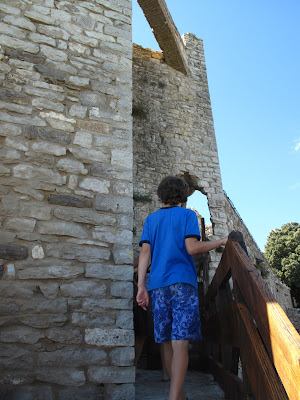
This long walkway leads you to a wonderfully restored stone fortress with sweeping views of Lake Trasimeno, the lake's islands, and Cortona climbing the distant mountainside.  Kids can have fun exploring the ramparts, climbing the tall three-sided bastion tower called "the masio," or take in the shade of the olive trees in the castle's bailey.

View of lake Trasimeno and Rocca de Leone from the "Masio" tower, Castiglione Del Lago, Umbria, Italy
View From The Masio
Climbing the towers and ramparts of Rocca de Leone in Casliglione Del Lago, Umbria,  Italy
Exploring the ramparts of Rocca de Leone castle in Castiglione Del Lago, Umbria, Italy
Strolling under the shade of the ancient olive trees along the ramparts of Rocca de Leone castle of Castiglione Del Lago, Umbria, Italy
If you have worked up an appetite from exploring the fortress, many excellent local Osterias serve local specialties from Lake Trasimeno.  Look for a dish called Brastico, which is fish fire-roasted over reeds from the shore of Lake Trasimeno.  Or perhaps try Tegamaccio, a soup made with several different types of lake fish, baked in terracotta pots for five hours.  Alternately you can grab some take-out food such as panini (sandwiches), arancini (deep-fried rice balls stuffed with meat and or cheese) or pizza sold by the gram and head to the public beach for a picnic.  The beach at Castiglione Del Lago is sandy; the water is warm, clear and shallow, perfect for kids to cool off on a hot day.  The lake water is tested daily from April through September to make sure it is safe for swimmers.

Sandy public beach park of Lake Trasimeno at Castiglione Del Lago,  Umbria, Italy

Family time in Tuscany has never been so much fun!  What is your favourite family activity when visiting Tuscany?  Let me know in the comments below...


Follow me on FACEBOOKINSTAGRAM  and  BLOGLOVIN'  for daily photos and updates! #slowtravel🐌


Saturday, November 21, 2020

Best of Rome's Piazzas

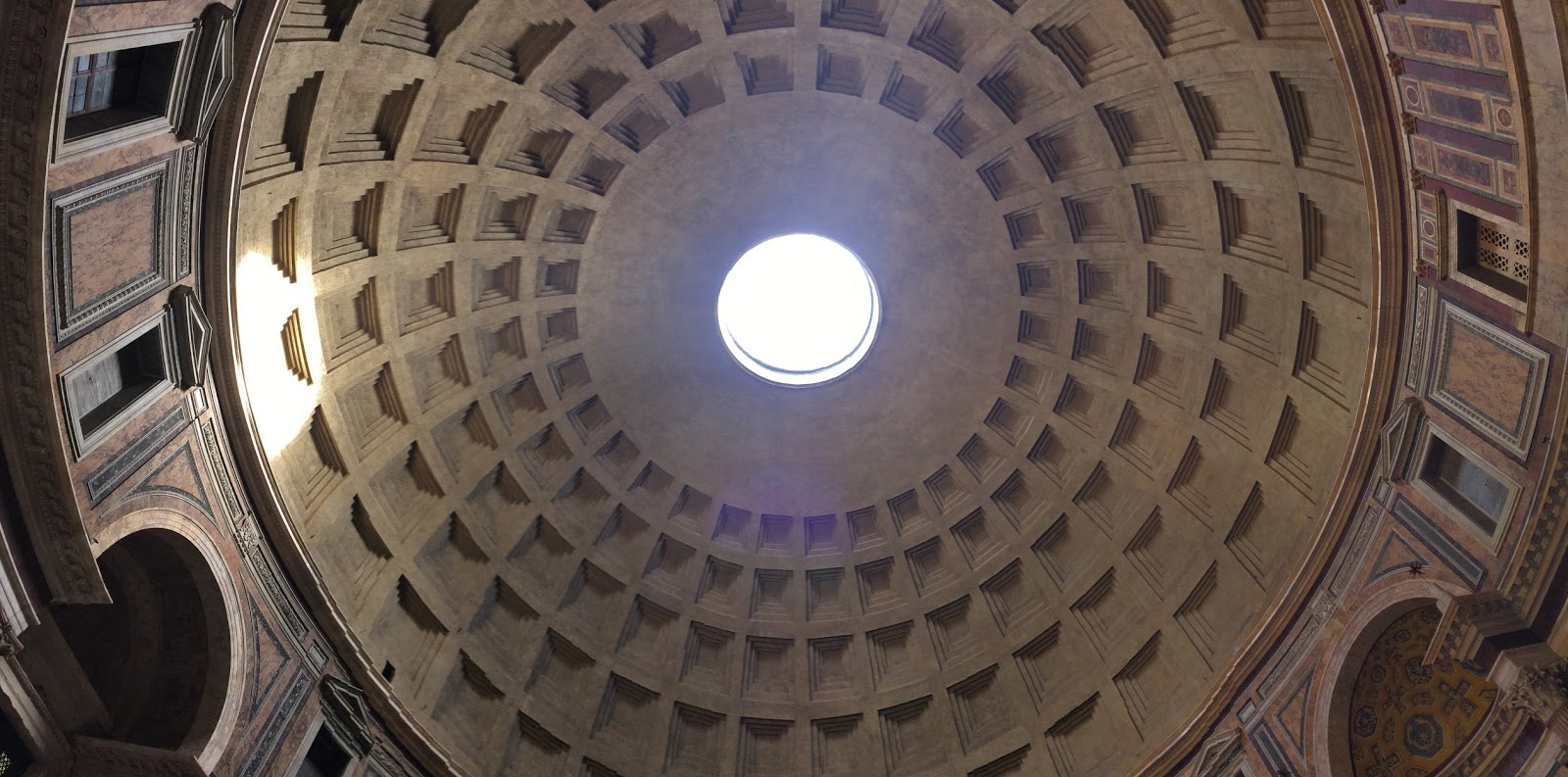
The oculus in the roof of Rome's Pantheon, Rome Italy

The Pantheon.  Trevi Fountain. Spanish Steps. Piazza Navona. Campo de Fiori. Iconic monuments of Rome are loved by the world.  Come along as I string together these classic "must-see" places in Rome.

The white Spanish Steps covered with happy people soaking in the sun, Rome, Lazio, Italy
Spanish Steps
The historical centre of Rome has many public spaces that are not only beautiful but are historical treasures.  Wonder at some of the oldest buildings in Rome, marvel at some of Rome's best art, and shop in the coolest neighbourhoods in Rome~all for FREE!   You can easily walk the "famous-five" public piazzas linking them together to make an afternoon or evening stroll.

First on my "to see & to be" list is the Spanish Steps. We have never made it this far North in the center of Rome, and I was very excited to see this neighbourhood.  I love walking in Rome; around every little corner, there is something new to discover. It's still a medieval hodgepodge of windy streets, so unorganized and organic, compared to, say, Paris.  Passing through the neighbourhoods around the Spanish Steps, it becomes very affluent, and the shops were becoming more upscale as I approached the Steps.  Eventually, coming to the main shopping drag, all the Italian lux brands were represented. It was becoming apparent that we would not be stopping here for lunch, as it's WAY too expensive.


The beautifil white church Trinita dei Monti above the Spanish Steps, Rome, Lazio, Italy
Trinitá dei Monti church


Then the gorgeous white staircase appeared before me, crowned by the gorgeous white Church: Trinità dei Monti. We found a spot on the "scala" (steps) and watched all the people soaking in the sun of Piazza di Spagna.  UPDATE: Since August of 2019, you are no longer allowed to sit on the Spanish Steps.  A fine of €400 will be handed out to you if you are caught. Built in 1725, these steps were the traditional spot for beautiful women to sit, hoping to get noticed by Rome's artists to become their muse.  Apparently, centuries of people's bottoms gracing this cultural relic mean they are in danger of being damaged.


Panorama of The Pantheon, Rome, Lazio, Italy


Next on to the Pantheon.  I have been to see the Pantheon several times, but never when it has been open to check out the inside. This morning, along with my Roman friend Sara, I decided to take a peek inside this ancient monument. The origin of the Pantheon was a Pagan temple to the Roman Gods (Pan=many + Theos=God) and there were a lot of Gods!  When Christianity became the only legal religion, the building was re-purposed as a Christian church, which is how it survived intact to this day.  The ceiling is a work of art and engineering, using a Roman invented material: concrete. The oculus in the dome is open to the sky to let in the light (and rain) and reminds us that we are always connected to nature.  Victor Emmanuel, the king who unified Italy, is entombed here and the great Renaissance artist Raphael among others.


Double bike parked outside one of Rome's quaint lunch spots, Rome, Lazio, Italy
How Rome Rolls

Tummies are starting to grumble at this point; so we decide to grab lunch at a local restaurant.  TIP: If you can just go off the main drag for a block or two from any major attraction, you can find restaurants that are only open for lunch that caters to locals on their lunch  break=affordable and home cooking.

That's exactly what Sara and I did.  Great pizzas, salads and more stuffed "zucchine" flowers (yum) washed down with a half-litre of the restaurant's house white wine. Bello!  


Neptune's Fountain in Piazza Navona, Rome, Lazio, Italy


With the tremendous lunch, we had the energy to move on to Piazza Navona. What a grand public square!  Back in ancient Roman times, this piazza was a stadium and known as "Circus Agonales" where people used to watch the "agones" or games. When the stadium was decommissioned, the square was used as a local market, which was then moved to Campo de' Fiori.


Fountain of The Four Rivers by Bernini in Piazza Navona, Rome, Lazio, Italy
Fountain of Four Rivers


OK, crush alert:  I am totally in love with the Baroque period artist; Bernini.  I absolutely love his sculpture even more than Michelangelo.  It is his over the top Baroque essence; the emotion his sculptures convey.  This man was brilliant. Here in Piazza Navona are the famous Bernini statues: The Fountain of the Four Rivers surrounding the Egyptian Obelisk brought to Rome by Emperor Caracalla.  Fontana del Moro balances with Fontana of Neptune on either end of the piazza, created by artist della Porta. Bernini is the Baroque sculpture MASTER, and this piazza does not disappoint.  Pope Urban VIII said to Bernini: "YOU are made for Rome, and Rome for you." I believe that without a doubt.
If you want to see a movie about Rome and Bernini, watch Angels and Demons adapted from Dan Brown's book-it's pure travel porn.


Panaorama of Piazza Navona, Rome, Lazio, Italy
Piazza Navona


Waiting in line at Frigidarium Gelateria in Piazza Navona, Rome, Lazio, Italy


While Bernini may have been made for Rome, I was made for gelato.  To eat it, that is. Yes, It was time for my daily gelato, and Frigidarium between Piazza Navona and the Pantheon is a great place to stop in!  The lemon gelato here was delicious!  TIP: the best gelato is not the mountains of super bright coloured stuff that's filled with artificial flavour and colour!

Look for subtitle colours of gelato, a soft, spreadable consistency, packed tightly into a metal tin with a lid, and is scooped out by flat paddles.   You can always tell a good gelato place by looking at the lemon gelato-it should be white instead of yellow.  And really, there is no such thing as "bad" gelato, in my opinion.  So don't worry about it too much. The only way to be a true connoisseur of gelato is to eat your own weight of it while you are in Italy.


The statue of Bruno overlooking the market stalls of Campo de' Fiori, Rome, Lazio, Italy


Campo de' Fiori is Rome's colourful outdoor market.  Everything from fruits and vegetables to souvenirs is sold here, while butchers, bakers and cheesemakers shops surround the market stalls.  There are many historic buildings in the area that date back to the Rennaisance period of Rome.  Campo de' Fiori is my favourite area in Rome because of the bohemian vibe and its people-watching potential.  For more about Campo de' Fiori, check out my blog post: Rome's Outdoor Market.


The Enoteca is a great place to have an evening cocktail, Campo de' Fiori, Rome, Lazio, Italy
Enoteca
 
 Aperitivo hour in Rome is 5:30-7:00pm (ish), grabbing a table in a piazza or heading out to an enoteca.  An enoteca is a wine bar where you can order wine by the glass, from opened bottles of wine; sometimes, they are special vintages.  If you like the glass of wine, you can buy the bottles to take home. My favourite enoteca in Campo de' Fiori is called Il Goccetto. HEAVEN.  Along with wine, they have marvellous cheeses and sausages to share around the table.  You can bring your teenager there, no problem.    The best part of this experience: we were the ONLY tourists there!


TIP: dinner hour in Italy starts at about 8:00 and continues to 10:00 or 11:00 at night.  That's why it's handy to have a larger lunch or a small snack at 5:00, so you can make it to the late dinner time.  I  conveniently grabbed some bottles of wine to go from the enoteca, to have on hand for the remainder of my time in Rome.


Trevi Fountain is even more beautiful lit up at night, Rome, Lazio, Italy

Rome at night has a different pace and atmosphere than during the daytime.  Check out my blog post: A Night Stroll Through Rome to all the same piazzas, including the famous Trevi Fountain.  The evening stroll in Italy before and after dinner is customary and called the passeggiata. There are far fewer tourist crowds at night, so you will be able to get close enough to the fountain to actually toss the customary coin in the waters.  Be careful, don't try to wade in the fountain like in La Dolce Vida, or you will get slapped with that same €400 fine for sitting on the Spanish Steps!


What are your favourite piazzas in Rome? Perhaps they are a bit off the beaten path? I would love to hear about them in the comments section below!

Follow me on FACEBOOKINSTAGRAM  and  BLOGLOVIN'  for daily photos and updates! #slowtravel🐌 


Sunday, September 13, 2020

Rome's Outdoor Market~Campo de' Fiori

Fresh artichokes in Campo de' Fiori market, Rome, Lazio, Italy


Campo de' Fiori is one of Rome's most vibrant neighbourhoods in the historic centre.  A bustling market by day and rendezvous spot for an evening drink. This is the pulse-point of Rome... 
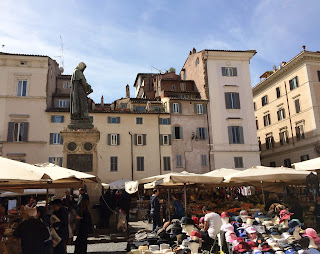

Vendors under their tents in Campo de' Fiori market, Rome, Lazio, Italy
Campo de' Fiori Market


Campo de' Fiori, translated from Italian, literally means "Field of Flowers" because, until the middles ages, this spot remained a grassy field.  Located next to the floodplains of the Tiber River, the Christian pilgrims coming into Rome to see the Pope stopped at the open meadow, which served as a thriving marketplace.  The field was paved over in the mid-1400s to make a piazza or square, as Rome expanded to make room for Renaissance palaces.  The piazza is rustic and cobblestoned, yet there are elegant palaces such as Palazzo Farnese located steps away.
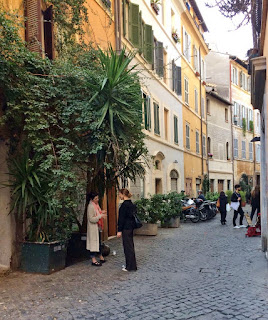
One of Campo de' Fiori's charming streets, the Via dei Cappellari. Rome, Lazio, Italy
Via dei Cappellari


TIP: IT'S ALL ABOUT LOCATION, LOCATION LOCATION!  When choosing a place to stay in a new city, I try to find a neighbourhood that is in the oldest part of town but a few streets over from the main drag.  I like being in a historical center close to restaurants and bars, but far enough away that loud laughter from an outside patio doesn't keep me awake at night.
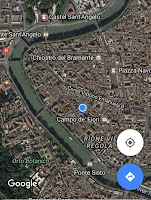

Satellite image of Rome's Campo de' Fiori neighbourhood along the Tiber River, Rome, Lazio, Italy
Campo de' Fiori is a Renaissance-style neighbourhood located between Corso Vittorio Emanuele II and the Tiber River.  With it's narrow, winding, cobblestoned streets, you can imagine being in Medieval Rome.  The roads are little alleyways of residential apartments over charming small independent businesses. This area has been a commercial zone for centuries; many of the shops have bee run by the same family for generations.
Walking the charming Medieval streets of the Campo de' Fiori neighbourhood, Rome, Lazio, Italy

I often choose an Airbnb apartment on Via dei Cappellari when I come to Rome. Via dei Cappellari means "street of the hat makers" and is one of my favourite streets in the Campo de' Fiori neighbourhood because of the funky architecture and bohemian vibe of the locals.  Campo dei Fiori has a long history worth seeking out, including its sad share of public executions.  In the center of the piazza, you will notice an imposing statue of a hooded figure looking towards the Vatican.  This is Giordano Bruno, who was burned in 1600 on the very spot the statue sits on today.


Statue of Giordano Bruno overlooking the Campo de' Fiori market stalls, Rome, Lazio, Italy


Bruno was a philosopher, mathematician, poet and cosmological theorist.  He had views that built on Copernicus's theory that the Sun is the centre of our Solar System.  Bruno's idea was Pluralism; that each star in the sky was a Sun just like ours that it had its own set of planets revolving around them.  He believed that these distant planets may also have life, and the Universe was infinite and could have no centre.  Giordano Bruno was also a Dominican friar, and he should have known better;  the Pope did not like his theories.  Bruno was tried by the Vatican starting in 1593 and then burned at the stake seven years later in 1600.  He became a martyr to science and, at the base of his statue, reads, "A BRUNO-IL SECOLO DU LUI DIVINATO-QUI DOVE IL ROGO ARSE"  which means "To Bruno, From The Age He Predicted, Here Where The Fire Burned."
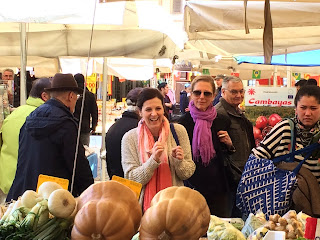


Buying produce from the market vendor stalls in Campo de' Fiori, Rome, Italy
Trying to purchase food in Italian!

The statue of Bruno was erected in 1889, much to the protest of the Vatican. But the freethinking residents of Campo de Fiori rallied for the figure of Bruno to be erected. This all may sound like a grim memory of the past, but to me, it captures the rebellious and anti-authoritarian, free-spirit of the Campo neighbourhood.  As for the Campo de' Fiori market itself, it's a parade of seasonal bounty! For you foodies out there, the market has it all;  flowers, fruits, vegetables, spices, fresh pasta, oils, and a bunch of tourist trinkets all mingled in this lovely piazza.


Local, in season produce available at the Campo de' Fiori Market, Rome, Lazio, Italy


It's lots of fun to try and buy your food at the market, speaking in Italian.  Luckily, I had my Roman friend, Sara, to guide me.  Sara lives in the Campo de' Fiori neighbourhood, so she shared her favourite veggie stands, salumeria, cheese shop, and bakery.  TIP: DONT TOUCH THE MERCHANDISE!  This is a big no-no in Italy.  Your vendor will either pick out your produce for you or hold up the produce for you to approve.  If you are feeling brave, and you would like to try before you buy your "go-to" phrase, is "Posso provare?" I can try?
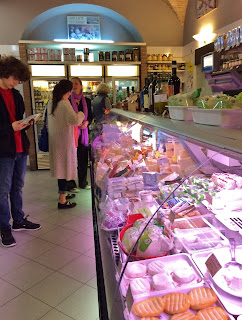

Fromaggi di Gianna & Paola cheese shop in Campo de' Fiori, Rome, Lazio, Italy
Cheese Shop


This phrase also works well in the cheese shop, sausage shop, bakery or pastry shop.  Here you will want to say, "Posso provare una fetta"  A "fetta" is a slice, so you are asking to try a piece.  Most of the time, I forget my Italian words; if you just ask "Posso?"  and mime an eating motion, the vendors are happy to oblige!  The best cheese shop in the neighbourhood is the Formaggi di Gianna & PaolaThis is a fantastic cheese shop that also sells other milk products and some gourmet grocery items. The shop is located on the corner of Vicolo del Gallo and Via dei Cappellari as it spills out into the market.
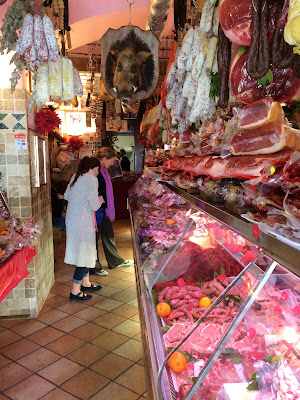

Norcineria Viola Campo de' Fiori's amazing butchershop. Rome. Lazio, Italy


Across the street from the cheese is my favourite bakery, hands down; Forno Campo De' Fiori.  Not only do they make excellent bread, cookies, breakfast rolls, but amazing pizza too!  The building that houses the Forno is the historical place where Vanozza de' Cattanei ran an inn while she was the mistress of Pope Alexander VI, who was a Borgia.  This bakery is where the infamous Lucrezia Borgia was born!  Lucrezia was the famous femme fatal who poisoned husbands and lovers while she ruled as the Governor of Spoleto.  Check out my blog post on Spoleto, Umbria.

Another staple of the neighbourhood is the Norcineria Viola butcher shop located at #43 Campo de'Fiori.  The "Purple Norcineria" has been selling their delicious Umbrian style sausages from this location since 1890.  A Norcineria is a butcher who makes pork products in the traditional Norcia, Umbria style, including wild boar sausage, fennel sausage, liver salami with orange peel and the most famous, round Umbrian sausage nicknamed Coglione di Mulo or "donkey's balls."
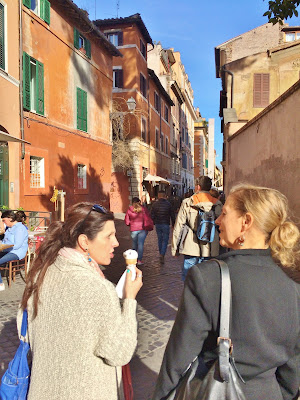
Gelato from FLOR in Campo de' Fiori, Rome, Lazio, Italy
Mobile Treat


After shopping all those market stalls, cheese vendors, bakeries, pasta shops, pastry shops, butcher shops and wine shops of the Campo de' Fiori, its time for a treat! What would a day in Italy be without gelato!?!  
One of the best gelaterias in the Campo is FLOR.  Located at the far end of the square from the bakery  51 Piazza Campo de' Fiori.  Here you will find authentic artisanal gelato without the addition of artificial colours and flavours that you see in some gelaterias catering to tourists.
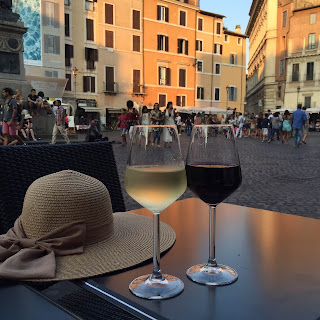


Glasses of wine at aperitivo hour overlooking the Campo de' Fiori, Rome, Lazio, Italy  


Of course, the tradition in Campo de' Fiori is once the market winds down, to enjoy an aperitivo or pre-dinner drink and snack overlooking the square.  You may pay more for your glass at a table on the piazza, but you are paying for scenery and the ambiance~ basically, you pay more for the real estate.  But if you some of my money-saving tips I provide in my blog posts (like buying products at the market to prepare in your Airbnb kitchen instead of eating out every meal), you can afford to splurge on a romantic glass of wine on one of Rome's most dynamic piazzas.  
Salute!

Do you have any favourite shops in Campo de' Fiori?  Or perhaps you have a special memory of the Campo; I would love to hear about it in the comments below!


Follow me on FACEBOOKINSTAGRAM  and  BLOGLOVIN'  for daily photos and updates! #slowtravel🐌