Translate

Showing posts with label Museum. Show all posts

Friday, June 12, 2026

5 Tips For First Timer's To Lisbon, Portugal


With a castle-topped hill, lively grand squares, brightly tiled buildings, and endless views, Lisbon is a bustling wonder.  My first time in the colourful  Portuguese capital was a delightful whirlwind that left me longing for more.

Red terracotta rooftops of Lisbon glowing in the sunset

Lisbon has been changing over the past 10 years.  Once the Portuguese capital was a European bargain, but the word has gotten out, and Lisbon is as expensive as Rome, Barcelona or Paris. The recent increase in tourism and expats moving to Portugal has caused a lot of growing pains for
Lisboetas, driving up housing prices and pushing locals out of the city.  There are still some authentic slices of Lisbon culture to be enjoyed if you know where to look.


For a first-time visit to Lisbon, I recommend at least a 3-night stay; 5 nights would be ideal if you have the time. International travellers will most likely arrive at Humberto Delgado Airport in Lisbon.  It's a bustling hub about a 15-20 minute ride from the downtown area. In the arrivals hall, right after you clear customs, there is a tourist information center where you can grab some maps, purchase a LISBOA card, and get up-to-date information that may not be in a guidebook or on any tourist websites.  

Vintage yellow tram in Lisbon driving the busy streets


TIP #1 THE LISBOA CARD
 
is an all-in-one attraction/transportation card that allows you to use all public transport, like subway, buses, trams, funiculars and even trains, as well as entry into 51 museums and monuments.  The LISBOA card is available in 24 hours for 31€, 48 hours for 51€  and 72 hours for 62€ validity windows. I purchased a 72-hour LISBOA card that lasted the duration of my stay. The card ended up saving me a lot of time, money and hassle of buying a separate public transit card. Many museums let you skip the ticket lines with the LISBOA card, which can save you hours.  The LISBOA card is valid from the first time it is used to enter an attraction or public transportation.  
BE AWARE: MOST ATTRACTIONS IN LISBON ARE CLOSED ON MONDAYS!


Man crossing street in in Lisbon Portugal

TIP #2 GETTING AROUND LISBON  I found the best way to get from the airport to central Lisbon is the subway. In 2026, the cost was €1.90 plus a .50 for the reloadable Navegante card that allows you to zap on and off the public transport.  I used my LISBOA card, which I purchased at the airport when I landed. There are only 4 metro lines that service Lisbon, making it simple to navigate the city, and it only took me 30 minutes during morning rush hour to get to my accommodation.  Taxis are expensive during rush hour, and yes, you can get ripped off easily. It costs about €20 to get from the airport to central Lisbon.  There are also two popular ride-share apps in Portugal: Uber and BOLT.  Bolt is cheaper and more popular than taxis or even Uber, and even delivers food.  For example, it only cost me €8 to get back to the airport when it was time to leave Lisbon.  That's less than half the price of a taxi! 


For all things transportation in Lisbon, there is a really helpful YouTube channel called: "ROAD TRIP SPAIN & PORTUGAL"  linked: HERE 


Tip #3 CHOOSE FOOTWARE WISELY  
Like Rome, Lisbon is known as "The City of the Seven Hills," but unlike Rome, these hills are incredibly steep and will leave your calves burning! Be aware that the danger levels increase for slips when the beautiful polished white Limestone and black Basalt cobblestones called calçada become wet with rain or humidity, they turn incredibly slick. Look for Escadinhas da Saúde, which are outdoor public escalators. You can even set your route navigation in Google Maps to wheelchair accessible in your route options, to show you a route using escalators, funiculars and elevators that are sometimes located inside public buildings.  A fun way to take a break from walking is to ride one of the vintage trams back to your accommodations.  If you want to ride the iconic Tram 28, do so early in the day or not at all.  The lines of tourists trying to cram like Portuguese sardines into the tram are not a fun experience.


Man sitting on the ramparts of Sao Jorge Castle in Lisbon

TIP #4 GET LOST IN ALFAMA & MOURARIA       These two districts are the oldest areas of  Lisbon that survived the 1755 earthquake.  I stayed at an Airbnb in the Alfama district of Lisbon, so I could explore the Medieval charm and narrow pedestrian streets in the evening after a day of sightseeing.  There are many authentic traditional restaurants called Tasca's in this area.  Lisbon's Castelo São Jorge was a short walk away through the maze-like streets. Arriving in Lisbon on a Monday morning, most attractions covered by the Lisboa Card are CLOSED.  São Jorge Castle is open 7 days a week from 9 am-9 pm, and has some of the most fantastic views of the city.  

Alfama is also the home of Fado music, a traditional folk blues that is usually performed in restaurants and bars.   I went to Alfama Grill that had wonderful Fado singing starting around 6-7 pm.  If you are interested in the tradition of Fado, don't miss the Museum of Fado: museudofado.pt


Two egg custard tarts a coffee and a Sagres beer
Tip #5 ADJUST YOUR EATING TIMES Breakfast in Portugal is quick and light. Your traditional egg custard tarts, called pastéis de nata, are enjoyed with your coffee and later as a snack (lanche) in the afternoon around 4 pm.  Lunch is between 12:30 and 3 pm, often a quick hot pork sandwich on a crusty roll called a bifana that people line up for at a lunch counter.  Dinner is usually at night between 8 and 10 pm, which can be late for many North Americans.  The waiter will bring the table an appetizer called a couvert.  This is not free and will be added to your bill if you do not tell your waiter no thank you.  Dinner in Lisbon is a hearty, relaxed affair when you can linger over delicious house wine and grilled seafood. The menu will always have bacalhau or cod and sardine dishes that are staples in all Lisbon restaurants.

Stay tuned for more practical planning advice for Lisbon and the rest of Portugal!


 I hope these tips have been helpful in planning your first trip to the radiant city of Lisbon.  If you would like to add a tip for folks, please leave them in the comments below.

Follow me on FACEBOOKINSTAGRAM  and  BLOGLOVIN'  for daily photos and updates! #slowtravel🐌

Saturday, November 21, 2020

Best of Rome's Piazzas

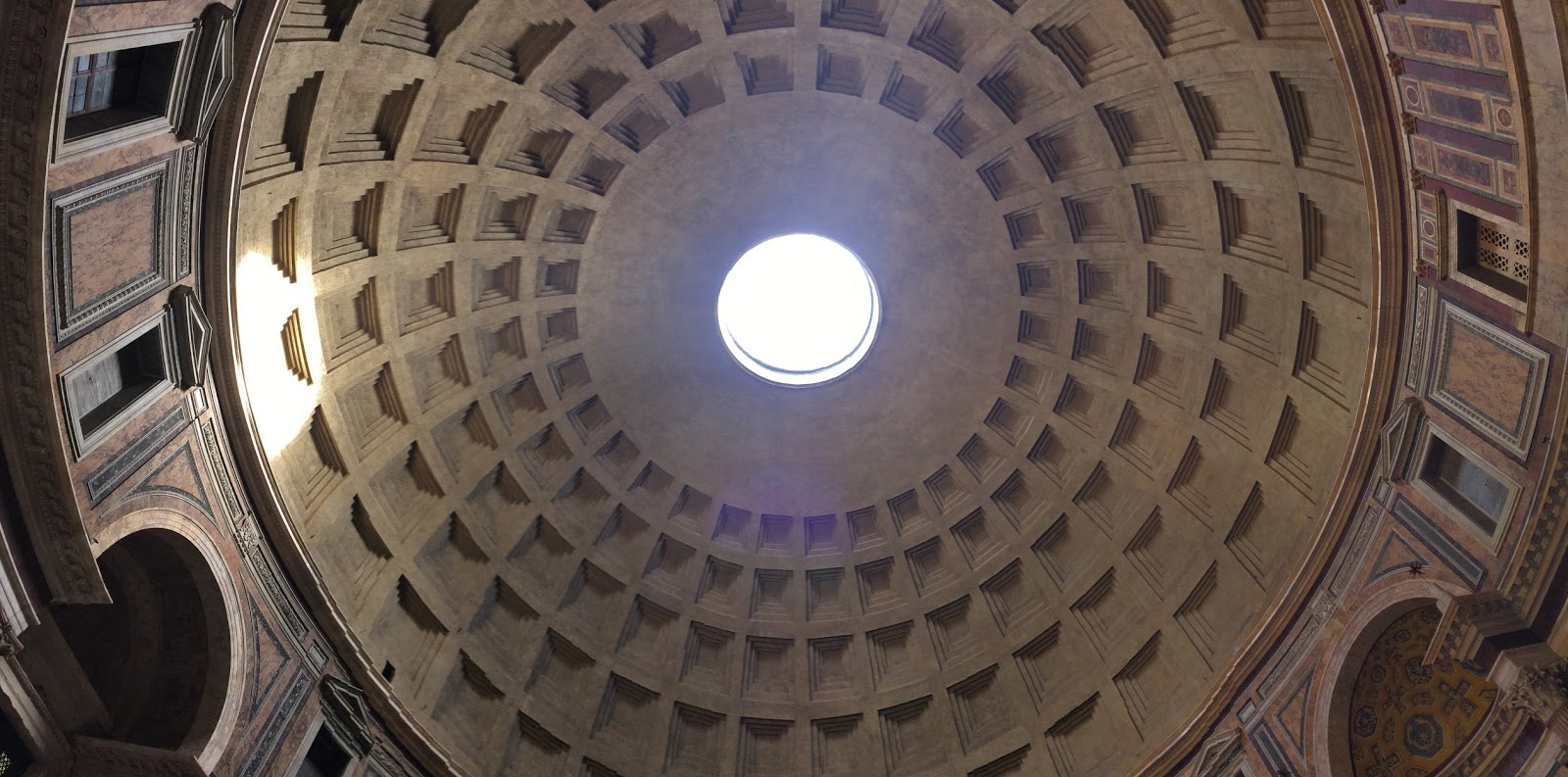
The oculus in the roof of Rome's Pantheon, Rome Italy

The Pantheon.  Trevi Fountain. Spanish Steps. Piazza Navona. Campo de Fiori. Iconic monuments of Rome are loved by the world.  Come along as I string together these classic "must-see" places in Rome.

The white Spanish Steps covered with happy people soaking in the sun, Rome, Lazio, Italy
Spanish Steps
The historical centre of Rome has many public spaces that are not only beautiful but are historical treasures.  Wonder at some of the oldest buildings in Rome, marvel at some of Rome's best art, and shop in the coolest neighbourhoods in Rome~all for FREE!   You can easily walk the "famous-five" public piazzas linking them together to make an afternoon or evening stroll.

First on my "to see & to be" list is the Spanish Steps. We have never made it this far North in the center of Rome, and I was very excited to see this neighbourhood.  I love walking in Rome; around every little corner, there is something new to discover. It's still a medieval hodgepodge of windy streets, so unorganized and organic, compared to, say, Paris.  Passing through the neighbourhoods around the Spanish Steps, it becomes very affluent, and the shops were becoming more upscale as I approached the Steps.  Eventually, coming to the main shopping drag, all the Italian lux brands were represented. It was becoming apparent that we would not be stopping here for lunch, as it's WAY too expensive.


The beautifil white church Trinita dei Monti above the Spanish Steps, Rome, Lazio, Italy
Trinitá dei Monti church


Then the gorgeous white staircase appeared before me, crowned by the gorgeous white Church: Trinità dei Monti. We found a spot on the "scala" (steps) and watched all the people soaking in the sun of Piazza di Spagna.  UPDATE: Since August of 2019, you are no longer allowed to sit on the Spanish Steps.  A fine of €400 will be handed out to you if you are caught. Built in 1725, these steps were the traditional spot for beautiful women to sit, hoping to get noticed by Rome's artists to become their muse.  Apparently, centuries of people's bottoms gracing this cultural relic mean they are in danger of being damaged.


Panorama of The Pantheon, Rome, Lazio, Italy


Next on to the Pantheon.  I have been to see the Pantheon several times, but never when it has been open to check out the inside. This morning, along with my Roman friend Sara, I decided to take a peek inside this ancient monument. The origin of the Pantheon was a Pagan temple to the Roman Gods (Pan=many + Theos=God) and there were a lot of Gods!  When Christianity became the only legal religion, the building was re-purposed as a Christian church, which is how it survived intact to this day.  The ceiling is a work of art and engineering, using a Roman invented material: concrete. The oculus in the dome is open to the sky to let in the light (and rain) and reminds us that we are always connected to nature.  Victor Emmanuel, the king who unified Italy, is entombed here and the great Renaissance artist Raphael among others.


Double bike parked outside one of Rome's quaint lunch spots, Rome, Lazio, Italy
How Rome Rolls

Tummies are starting to grumble at this point; so we decide to grab lunch at a local restaurant.  TIP: If you can just go off the main drag for a block or two from any major attraction, you can find restaurants that are only open for lunch that caters to locals on their lunch  break=affordable and home cooking.

That's exactly what Sara and I did.  Great pizzas, salads and more stuffed "zucchine" flowers (yum) washed down with a half-litre of the restaurant's house white wine. Bello!  


Neptune's Fountain in Piazza Navona, Rome, Lazio, Italy


With the tremendous lunch, we had the energy to move on to Piazza Navona. What a grand public square!  Back in ancient Roman times, this piazza was a stadium and known as "Circus Agonales" where people used to watch the "agones" or games. When the stadium was decommissioned, the square was used as a local market, which was then moved to Campo de' Fiori.


Fountain of The Four Rivers by Bernini in Piazza Navona, Rome, Lazio, Italy
Fountain of Four Rivers


OK, crush alert:  I am totally in love with the Baroque period artist; Bernini.  I absolutely love his sculpture even more than Michelangelo.  It is his over the top Baroque essence; the emotion his sculptures convey.  This man was brilliant. Here in Piazza Navona are the famous Bernini statues: The Fountain of the Four Rivers surrounding the Egyptian Obelisk brought to Rome by Emperor Caracalla.  Fontana del Moro balances with Fontana of Neptune on either end of the piazza, created by artist della Porta. Bernini is the Baroque sculpture MASTER, and this piazza does not disappoint.  Pope Urban VIII said to Bernini: "YOU are made for Rome, and Rome for you." I believe that without a doubt.
If you want to see a movie about Rome and Bernini, watch Angels and Demons adapted from Dan Brown's book-it's pure travel porn.


Panaorama of Piazza Navona, Rome, Lazio, Italy
Piazza Navona


Waiting in line at Frigidarium Gelateria in Piazza Navona, Rome, Lazio, Italy


While Bernini may have been made for Rome, I was made for gelato.  To eat it, that is. Yes, It was time for my daily gelato, and Frigidarium between Piazza Navona and the Pantheon is a great place to stop in!  The lemon gelato here was delicious!  TIP: the best gelato is not the mountains of super bright coloured stuff that's filled with artificial flavour and colour!

Look for subtitle colours of gelato, a soft, spreadable consistency, packed tightly into a metal tin with a lid, and is scooped out by flat paddles.   You can always tell a good gelato place by looking at the lemon gelato-it should be white instead of yellow.  And really, there is no such thing as "bad" gelato, in my opinion.  So don't worry about it too much. The only way to be a true connoisseur of gelato is to eat your own weight of it while you are in Italy.


The statue of Bruno overlooking the market stalls of Campo de' Fiori, Rome, Lazio, Italy


Campo de' Fiori is Rome's colourful outdoor market.  Everything from fruits and vegetables to souvenirs is sold here, while butchers, bakers and cheesemakers shops surround the market stalls.  There are many historic buildings in the area that date back to the Rennaisance period of Rome.  Campo de' Fiori is my favourite area in Rome because of the bohemian vibe and its people-watching potential.  For more about Campo de' Fiori, check out my blog post: Rome's Outdoor Market.


The Enoteca is a great place to have an evening cocktail, Campo de' Fiori, Rome, Lazio, Italy
Enoteca
 
 Aperitivo hour in Rome is 5:30-7:00pm (ish), grabbing a table in a piazza or heading out to an enoteca.  An enoteca is a wine bar where you can order wine by the glass, from opened bottles of wine; sometimes, they are special vintages.  If you like the glass of wine, you can buy the bottles to take home. My favourite enoteca in Campo de' Fiori is called Il Goccetto. HEAVEN.  Along with wine, they have marvellous cheeses and sausages to share around the table.  You can bring your teenager there, no problem.    The best part of this experience: we were the ONLY tourists there!


TIP: dinner hour in Italy starts at about 8:00 and continues to 10:00 or 11:00 at night.  That's why it's handy to have a larger lunch or a small snack at 5:00, so you can make it to the late dinner time.  I  conveniently grabbed some bottles of wine to go from the enoteca, to have on hand for the remainder of my time in Rome.


Trevi Fountain is even more beautiful lit up at night, Rome, Lazio, Italy

Rome at night has a different pace and atmosphere than during the daytime.  Check out my blog post: A Night Stroll Through Rome to all the same piazzas, including the famous Trevi Fountain.  The evening stroll in Italy before and after dinner is customary and called the passeggiata. There are far fewer tourist crowds at night, so you will be able to get close enough to the fountain to actually toss the customary coin in the waters.  Be careful, don't try to wade in the fountain like in La Dolce Vida, or you will get slapped with that same €400 fine for sitting on the Spanish Steps!


What are your favourite piazzas in Rome? Perhaps they are a bit off the beaten path? I would love to hear about them in the comments section below!

Follow me on FACEBOOKINSTAGRAM  and  BLOGLOVIN'  for daily photos and updates! #slowtravel🐌 


Saturday, May 9, 2020

Cortona, Tuscany~A Slice Of Tuscan Sun

Cortona and the Val Di Chiana below, Tuscany Italy


 Cortona is perched upon a 1700 foot hill overlooking a fertile valley, with sweeping views of Lake Trasimeno and the Umbrian countryside.  Cortona has become a pilgrim site for those seeking the Tuscan Sun...


It's been over twenty years since Frances Mayes captured our hearts and imagination (not to mention our stomachs!) with her story of renovating an old villa named Bramasole in the hilltown of Cortona.  The 1997 movie loosely based on Mayes' book Under The Tuscan Sun became a bestseller and one of my favourites, and I knew I needed to make a pilgrimage to this classic village in Southern Tuscany.  But what is it about this rustic Tuscan hilltown that beckons people to fantasize about leaving their life behind and moving to Italy?  Cortona emits a laidback, friendly, community vibe and I would encourage you to explore the town for at least an overnight instead of pulling up in front of Bramasolle to take the "I was here" photo.


Cortona has been popular with foreigners since the Romantics Era in the 1800s.  Its location in the Val di Chiana in southern Tuscany near the Umbrian border makes Cortona close to so many central Italian hill towns such as Siena, Florence, Assisi, Orvietto, Montalcino, Pienza and Montepulciano to name a few. This is why Cortona was my first choice to rent a farmhouse for a week and explore the surrounding countryside.  I found our Tuscan villa on VBRO.com.  


Medieval street underpass in Cortona, Tuscany, Italy


Cortona is also central to Rome (2.5 hrs) Florence (1.5 hrs) Assisi (1 hr).  If you are taking the train to Cortona there are two stations located at the valley floor in the town of Camucia or one about 10 minutes South in Terontola, depending on where you are coming from.  Both train stations have busses that run up the hill to Cortona's main Piazza Garibaldi hourly.  Cars are a bit more difficult to navigate through the narrow and steep streets, but there are several free parking lots outside the city walls including Santo Spirito Church and the Santa Margherita Basilica at the top of the hill.


Most of Cortona's charming restaurants, museums and shops are located on the only flat street in town Via Nationale.  Exploring the streets of Cortona is a treasure hunt but the streets become very steep and turn into steps as you head to the top of town.  We chose to park at the free parking lot at the top of Cortona and check out the Basilica of Santa Margherita.   This graceful neo-gothic style church houses the incorrupt body of Saint Margherita on display in a silver and glass casket in a side chapel designed by Pietro of Cortona.  This was the highlight of the day for my 12-year-old son! 


Margherita of Cortona had an interesting and tragic life. She was born on a nearby farm in 1247 and at 17 ran off with the son of a rich Lord to live as his wealthy mistress in a castle in Montepulciano.  When her lover was murdered, Margherita and her son gave up her life of luxury and became homeless ending up in Cortona and taken in by the monks of Saint Francis.  She followed the order of Franciscans taking a vow of poverty and her nickname became "La Poverella"  or "little poor one."  Margherita established a hospital in Cortona and an order of sister-nurses called le poverelle.                                                                                                                                                                


The basilica interior is painted in blues and gold with a ceiling full of metallic gold stars, like the night sky. A carved wooden crucifix from the 1200s is at the alter and is the same crucifix Margherita prayed to at her time in Cortona.  To check hours of the basilica visit www.santamargheritadacortona.com    


Approaching outer walls of Girifalco Fortress in Cortona, Tuscany, Italy
Girifalco Fortress

Above Santa Margherita is an impressive fortress.  The well preserved Girifalco Fortress was built during Santa Margherita's time in 1258 but was rebuilt to its current appearance in 1500 on the order of Florence's Cosimo De Medici.   The castle foundations date back to the Etruscan era, and extensive renovations completed in 2010 sees the fortress as an art Gallery, culture center and a bistro.  
                                                                                                    You can climb the ramparts and for stunning views of the Val di Chiana, lake Trasimeno and Umbria about a mile beyond.  The entrance to Girifalco Fortress is €5.  For times and events check www.fortezzadelgirifalco.it 


Cortona was one of the largest Umbrian settlements until it was captured by the  Etruscan, who named it Curtun, which means "enclosed place" probably because there was a wall that surrounded the settlement.   Parts of this 2,500-year-old city wall and its gate can be seen today at Porta Bifora on the Westside entrance to Cortona.
                                                                                                                                                                                                                                                                                                                                                                                                                                                                                                                                                                                                                                                                                                                                                                                                                                                                                                                                                                                   

Viiew of the Val Di Chiana from the Girifalso Fortress, Cortona, Italy
View From The Fortezza


The Cortona Etruscan Archeological Museum is a great place to learn about the mysterious indigenous people of Tuscany.  The museum is housed in a 13th-century De Medici palace called Pallazo Casali on Piazza Signorelli.  In this quiet museum, you will find Etruscan artifacts galore, including the Cortona Tablet, a second century BC, 200-word bronze tablet discovered in 1992 that has helped archaeologists learn more about the Etruscan civilization.  There is also an exhibit on the Roman colonization of "Curtun," which the Romans changed to Corito.  
Tickets to the MAEC are €10, and a combo ticket to include the Archeological Park is €13.  Visit the MAEC website for more information: www.cortonamaec.org/it/


The Medieval Clocktower in Piazza Signorelli, Cortona, Italy

Another of Cortona's noteworthy museums is the nearby Diocesan Museum.  Located in the former Church of  Gesú on Piazza del Duomo. The Diocesan Museum houses stunning works by pre and early Renaissance heavyweights like Fra' Angelico, Pietro Lorenzetti, Sassetta. There is a whole room dedicated to Cortona's own Renaissance master, Luca Signorelli, whose memory lives on in the hilltown today.  The cost of the Diocesan Museum is €6, which comes with a free audioguide.  For times and more info, click the link to Cortona Diocesan Museum.                                                                                                                                                                                                                                                                                                                             


Cortona is a DOC wine region with excellent red, white and Vin Santo (dessert wine) offerings.   Cortona boasts about 20 wine bars called Enoteca's offering the region's best wines by the glass or bottle.  The Cortona Syrah is one of the most notable and delicious wines produced in the area. There are winery tours available; check at the Tourist Centre located in the courtyard of the Etruscan Museum for more information.  There is also a craft microbrewery and gastropub called Birrifico Cortonoese, providing delicious snacks with three on tap beers-or take a bottle home as a souvenir.  There is no shortage of excellent restaurants in Cortona, serving fresh, local traditional food.


For an excellent resource of trip planning information, local history or events happing in Cortona go to www.cortonamia.com.                                                                                                     


Cortona has a certain enchantment that many people from around the world have experienced, just as Frances Mayes had those many years ago.  Below is my journal entry from my first trip to Cortona, but you must come to witness the magic for yourself.


Follow me on FACEBOOKINSTAGRAM  and  BLOGLOVIN'  for daily photos and updates! #slowtravel🐌

This post first appeared in 2017 as "Cortona."