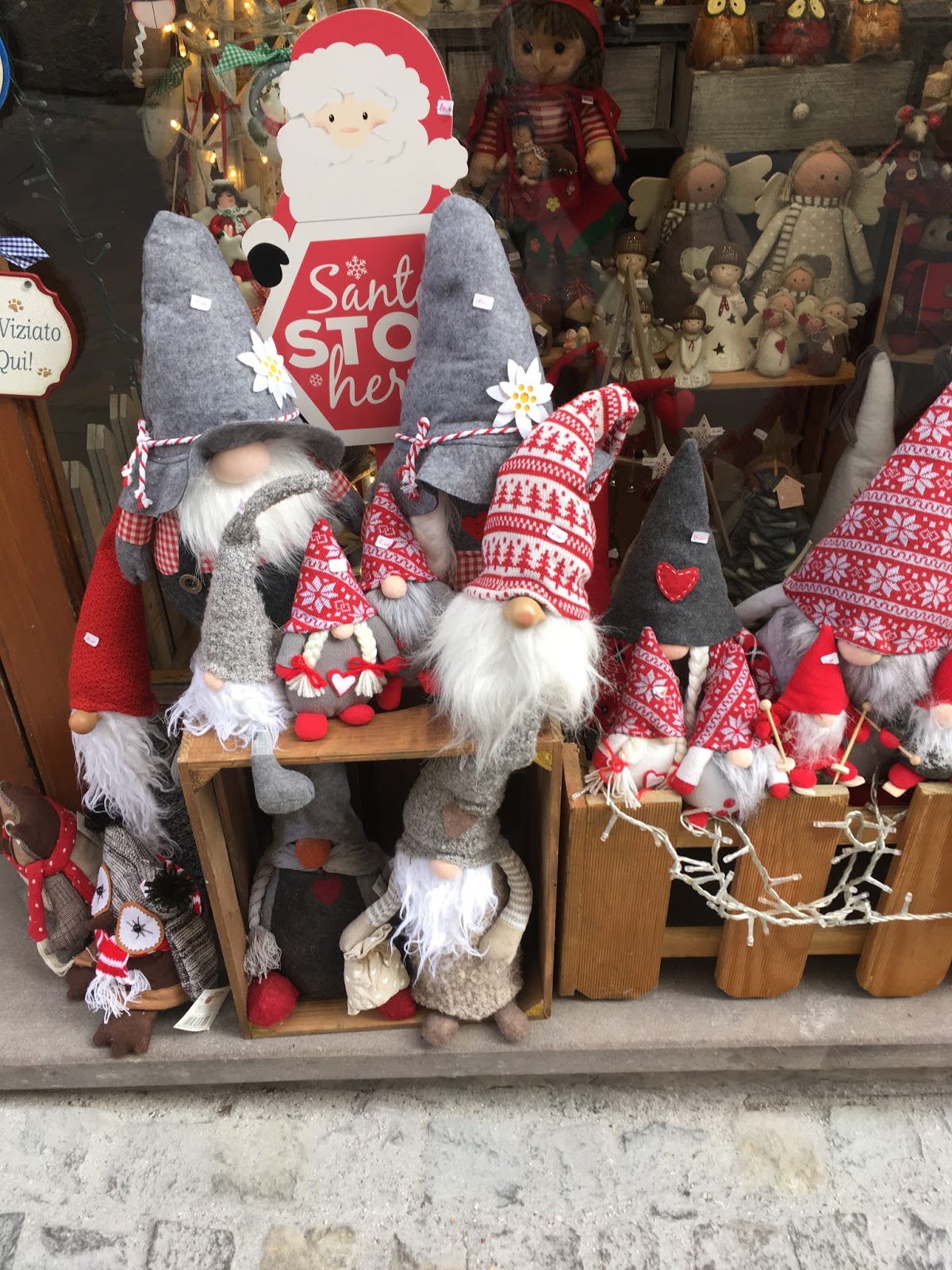
Deruta is a quaint hill town in Umbria's heartland. It is also Umbria's ceramics capital with a long tradition of majolica and ceramics reaching back to the Middle Ages...
 |
| Medieval Towers Of Deruta |
The little
Commune of Deruta sits upon a hill in the Umbrian Tiber river valley, halfway between Perugia, the capital of Umbria and its Medieval rival Todi. Deruta lies upon Roman foundations, but the remains of this era are all but lost due to the devastation caused by the Gothic Wars in the 6th century when Deruta was sacked by the Germanic Lombards. Deruta's name actually stems from the Latin word "
direpta" which means "sacked." Deruta had quite the struggle in the Middle Ages. Being halfway between warring Todi and Perugia, meant that Deruta was always a battleground for these Umbrian superpowers and was also an outpost for Perugia during its wars with the Papacy. If that weren't enough, Deruta was severely hit by the plague in the Middle Ages that decimated the town, reducing its population by half. Plundered by both the Borgia's and the Baglioni's, Deruta was not left in peace until the 1540's after the infamous Salt Wars between the Pope and the northern Italian states, when Perugia was slapped into place by the Papacy.
 |
| Ceramic Anticipation Growing! |
With such a tumultuous past, Deruta should have been beaten into obscurity, but something unusual has kept this hill town an artistic gemstone...its clay. The soil around the Tiber river valley has superior clay for making ceramics, and after the fall of the Roman Empire, the Early Middle Ages saw the dawn of ceramic manufacturing in Deruta. The ceramics industry grew in Deruta and hit its peak in 15th and 16th century.
There are several ruins of old kilns scattered amongst the circa 1300's buildings of Deruta, and it seems that every shop on the main drag sells pottery. In fact, there are over 200 ceramics factories and shops in Deruta. Nowadays the clay Deruta uses is being imported from Tuscany around Sansepolcro, but it is still fantastic quality.

We came to Deruta for lunch after a busy morning photo and video shoot for our belly dance costuming businesses:
Gypsy Dream and
PoppyPants Tribal and the village seemed like a virtual ghost town! No tourists, no locals, not even a cat roaming the streets; where was everybody? After wandering around the main drag "
Piazza dei Consoli" looking for an open restaurant, we decided to ask for food recommendations in a ceramics shop. The main theme in this shop was beautiful red poppies, and the work was amazing. The owner was very kind and pointed us to the only open restaurant in the "
Centro Storico" or the old town-
Taverna del Gusto. It seems that right after Christmas Deruta goes into a bit of a hibernation period because there are not many foreign tourists around. We poked our head in at the tiny taverna and asked for a table; it would be at least a 45-minute wait. No problem, we can do A LOT of shopping in 45 minutes!
 |
| Reindeers In Piazza Dei Consoli |
 |
| Hunting For Pottery |
 |
| Raphael's Dragon |
Filing past all the closed ceramics shops along
Piazza dei Consoli made me realize that our choices to purchase the famous Deruta style ceramics may be quite limited today. Many of the ceramic shops seem to have an artistic theme such as the poppies in the shop we had been in earlier. I was in search of the famous "
Raffaellesco" style painted pottery which is the trademark of Deruta ceramics. The Raffaellesco style refers to an early painting by the famous Renaissance artist Raphel depicting Saint Michael stomping on a dragon. The colour used to paint the Deruta dragons is called "Raphael Blue," and along with the Ruby and Gold colours used in Deruta ceramics, they were a closely guarded secret recipe. Today Deruta's terracotta factories are all in the valley on the way up to the historical centre, but many storefronts act as painting workshops like the one we found at the end of the Piazza:
Deruta Placens.
 |
| Deruta's Famous Raphaellesco Style |

Deruta Placens is a Mother and Daughter team that has two stores in the historical centre and a
laboratorio or factory at the foot of town making the pottery. The store we were in was near the fountain in the piazza, and it was chalk full of the most beautiful hand-painted pottery! In fact, when we walked into the shop, the owner was sitting at her desk painting dainty little espresso cups WITH A BROKEN ARM! That's right, she was so steady with her brush that she could execute the dainty brushstrokes with a cast on her wrist. Truly unbelievable. The owner of Deruta Placens (
placens is a Latin word for pleasing) told us that she has passed down her painting talent to her daughter as well. Historically the tradition of ceramics painting is passed down from mother to daughter because the women have smaller hands to the work she told us. The men were involved with digging the clay, making the terracotta and firing the pieces in the kilns.
 |
| Bella Donna Plate |
 |
| Our Raffaellesco From Deruta |
Another famous style of Deruta ceramics is the Renaissance era portrait plates which usually depict beautiful women, but can also be young men or knights. The main characteristics are the fluttering
banderoles or ribbons describing a name or flattering feature; these were super popular in the 1500's. Plates are still given today to bridal couples as wedding gifts and are stunning works of art. We purchased our very own piece of hand-painted pottery; a
Raffaellesco style plate for our farmhouse dining room at home in Ontario. My advice on buying Deruta ceramics is to stop by all the local shops and see what painting style you like, you can't really go wrong. For a great article on how to spot fake handmade Italian pottery click
here.

It was now time for our lunch reservation at
Taverna del Gusto. A small family run trattoria is what we were looking for with a lot of ambience, a great wine list and homemade food; this place certainly fit the bill. Great vaulted brick ceilings and alcoves stuffed with wine bottles, I was getting thirsty just looking around! We ordered a bottle of Rubesco or
Rosso di Torgiano which is a local favourite here. I had no idea that there are 13 DOC (designated origin controlled) wine areas in Umbria. These are like quality controlled wine regions like VQA in Ontario back home and guarantee the grapes are grown locally. In Italy, the DOCG label on a wine bottle ensures the quality of the wine is up to world-class standards.

Torgiano is a small Hamlet a few kilometres from Deruta, and they make the Torgiano Rosso Reserva which is a DOCG wine and the delicious, easy drinking red wine, Torgiano Rubesco. Torgiano Rubesco is aged for 1 year where the Rosso Reserva is aged for 3 years. The primary player in Torgiano is the
Lungarotti family winery, and they put this wine on the map. It's a great blend of half Sangiovese, 15-30% Canaiolo grapes, 10% Trebbiano and the rest is Montepulciano and Ciliegiolo. You may know the Canaiolo grape from some famous blends like Chianti and Vino Nobile di Montepulciano. In fact, the Canaiolo grape was the primary grape in Chianti until a blight hit Europe in the 1850's and wiped out much of the Canaiolo vines in Tuscany; oh the horror-stupid aphids!
The Rubesco is such a smooth drinking wine and is nicely paired with cheese and bread, tomato sauces and roast meat or chicken. It tastes like cherry jam, pepper and tobacco (maybe that's from all the tobacco that grows along the vineyards in Torgiano). 😁
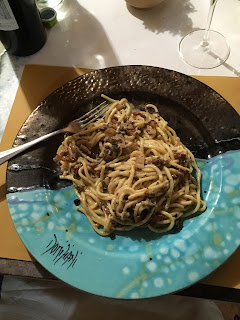

The wine went perfectly with our homemade pasta dishes which of course were covered in some form of black truffle; because we just couldn't seem to get enough of the "
Tartufo Nero" in Umbria and soon we would be heading north to Emilia Romania which is another food region entirely. The Rosso di Torgiano wine was so good in fact we thought we would head out to the hilltown of Montefalco on the way back to our AirBnB in Spoleto. It is said, for every bank in Milan and every church in Rome, there is an enoteca in Montefalco. Well, not really but there is a vast number of wine shops with a great selection of wines from all the 13 DOC wine regions of Umbria, including the famous
Sagrantino di Montefalco.
Picturesque Deruta was still empty when we left; no locals, no tourists. But at least we knew where the cats had gotten to...
 |
| How Much Is That Kitty In The Window? |
Follow me on INSTAGRAM and FACEBOOK for daily photos!


 We came to Deruta for lunch after a busy morning photo and video shoot for our belly dance costuming businesses: Gypsy Dream and PoppyPants Tribal and the village seemed like a virtual ghost town! No tourists, no locals, not even a cat roaming the streets; where was everybody? After wandering around the main drag "Piazza dei Consoli" looking for an open restaurant, we decided to ask for food recommendations in a ceramics shop. The main theme in this shop was beautiful red poppies, and the work was amazing. The owner was very kind and pointed us to the only open restaurant in the "Centro Storico" or the old town-Taverna del Gusto. It seems that right after Christmas Deruta goes into a bit of a hibernation period because there are not many foreign tourists around. We poked our head in at the tiny taverna and asked for a table; it would be at least a 45-minute wait. No problem, we can do A LOT of shopping in 45 minutes!


 It was now time for our lunch reservation at Taverna del Gusto. A small family run trattoria is what we were looking for with a lot of ambience, a great wine list and homemade food; this place certainly fit the bill. Great vaulted brick ceilings and alcoves stuffed with wine bottles, I was getting thirsty just looking around! We ordered a bottle of Rubesco or Rosso di Torgiano which is a local favourite here. I had no idea that there are 13 DOC (designated origin controlled) wine areas in Umbria. These are like quality controlled wine regions like VQA in Ontario back home and guarantee the grapes are grown locally. In Italy, the DOCG label on a wine bottle ensures the quality of the wine is up to world-class standards.

 The wine went perfectly with our homemade pasta dishes which of course were covered in some form of black truffle; because we just couldn't seem to get enough of the "Tartufo Nero" in Umbria and soon we would be heading north to Emilia Romania which is another food region entirely. The Rosso di Torgiano wine was so good in fact we thought we would head out to the hilltown of Montefalco on the way back to our AirBnB in Spoleto. It is said, for every bank in Milan and every church in Rome, there is an enoteca in Montefalco. Well, not really but there is a vast number of wine shops with a great selection of wines from all the 13 DOC wine regions of Umbria, including the famous Sagrantino di Montefalco.